
The Hidden Cost of “I’ll Figure It Out” Leadership
There’s a phase of entrepreneurship where “figuring it out” is necessary.
You say yes before you feel fully ready.
You improvise.
You move fast because you have to.
And honestly? That mindset probably helped build the business you have today. But somewhere between early traction and sustainable growth, what once made you resourceful starts quietly making your business heavier than it needs to be.
This is the pattern I see most often with high-performing founders running established businesses: the goals are clear, the demand is real, the ambition is absolutely there… but the operational pathways required to sustain that growth were never built alongside it.
So the business grows. And the founder’s capacity shrinks. I call this The Capacity Illusion. It’s when founders are seeing revenue come in, opportunities expand, and visibility increase, yet still feel constantly behind because the business lacks the infrastructure to support the next level.
And contrary to popular belief, this isn’t usually a motivation problem. It’s a capacity problem disguised as ambition.
A founder wants to launch the podcast, expand the offer suite, hire the team, increase visibility, write the book, and grow revenue, all while still operating inside workflows that were built for a much smaller version of the business.
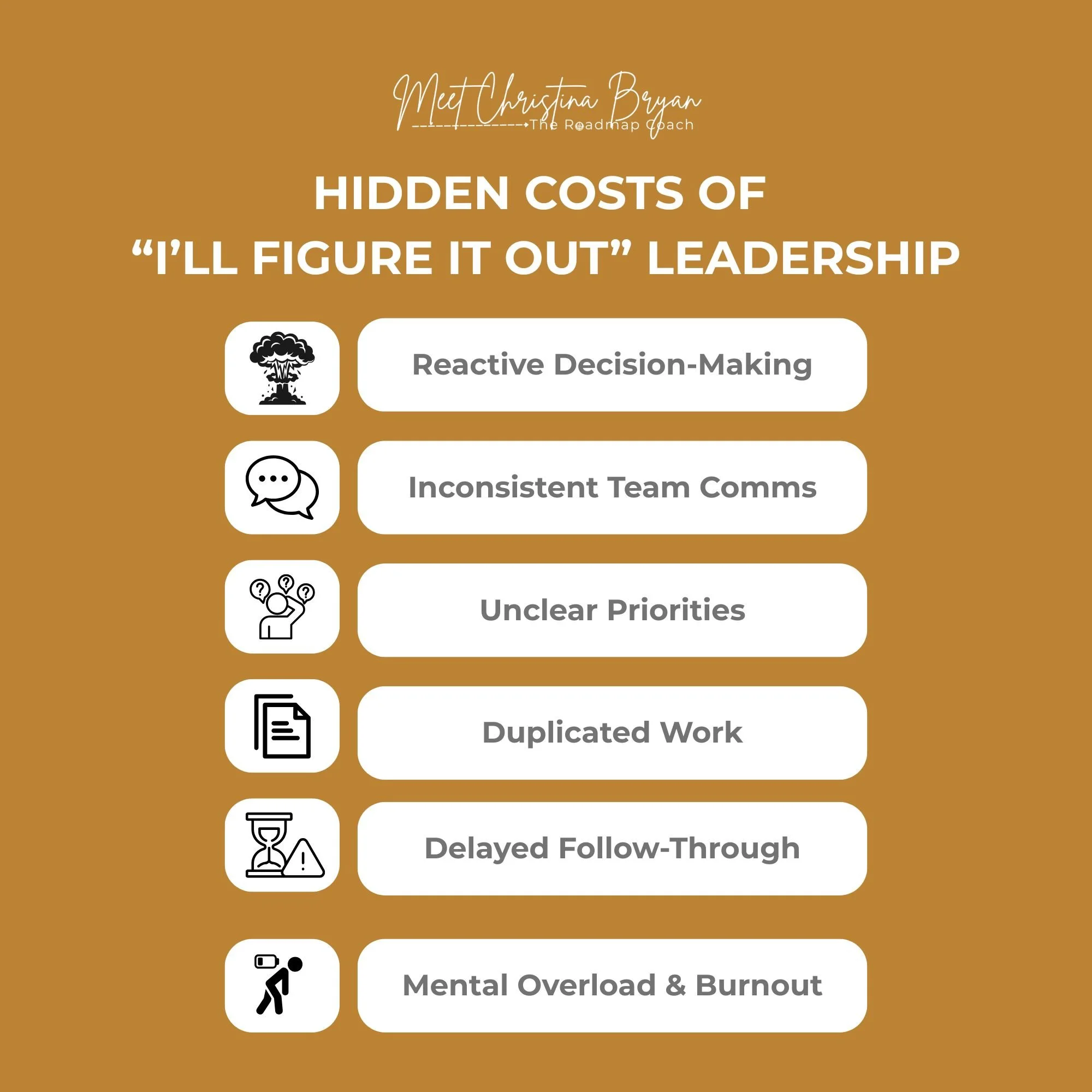
That gap creates hidden costs most people don’t account for. Not just financial costs. Operational and emotional ones too.
And the hardest part?
From the outside, the business can still look successful.
This is especially common in women-led businesses that have crossed the multiple six-figure mark. At that stage, founders are no longer proving they can generate revenue. The real challenge becomes building a business that can hold that growth without depending on constant overextension to maintain it.
Sometimes you truly do have to figure things out as you go. But that should be a temporary survival strategy, not the long-term operating model.
Because eventually, every growing business reaches a point where ambition and operational readiness have to meet each other.
What would change if you gave yourself permission to pause long enough to ask:
Does my current capacity actually support what I’m trying to build?
Do my workflows match the level of growth I say I want?
Is my business scalable… or am I just becoming more stretched?
These are different questions than, “How do I become more productive?” And that distinction matters.
Because productivity advice often assumes the problem is personal discipline. But many founders don’t need another morning routine or project management app. They need a business model, team structure, and operational rhythm that respects their actual bandwidth.
That’s why I believe sustainable growth has less to do with doing more and more to do with designing smarter.
The founders who scale well aren’t always the most disciplined. They’re often the ones willing to acknowledge where their business has outgrown its current systems and make intentional adjustments before burnout forces the issue.
Goals rarely fail because the vision is too big. They fail because the structure required to support them was never fully built.
If this resonates, I created a free resource called Inside the Fix: How I Turn “Overwhelmed Growth” into Structured Scale. It’s the exact checklist I use to assess where businesses are operationally strained, where capacity is leaking, and what needs to be strengthened before scaling further. Because rebuilding your business doesn’t mean burning it all down.
Sometimes it just means finally building the support structure your ambition deserved from the beginning.